

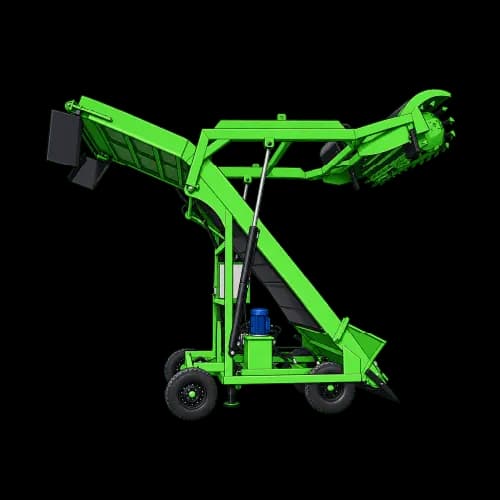
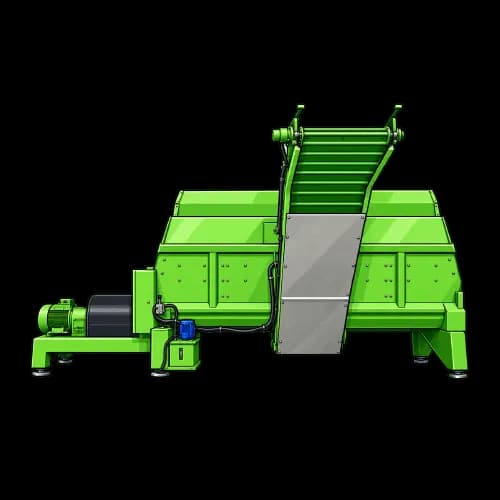
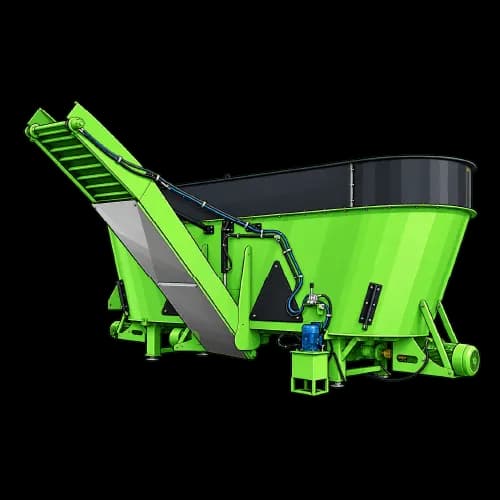
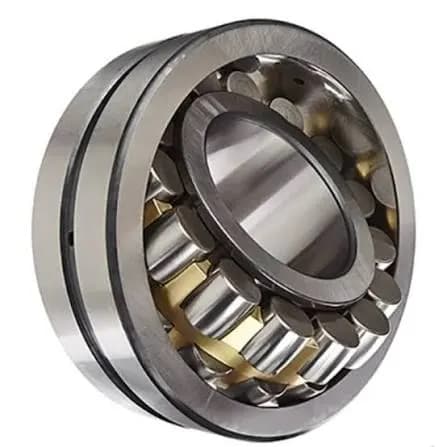
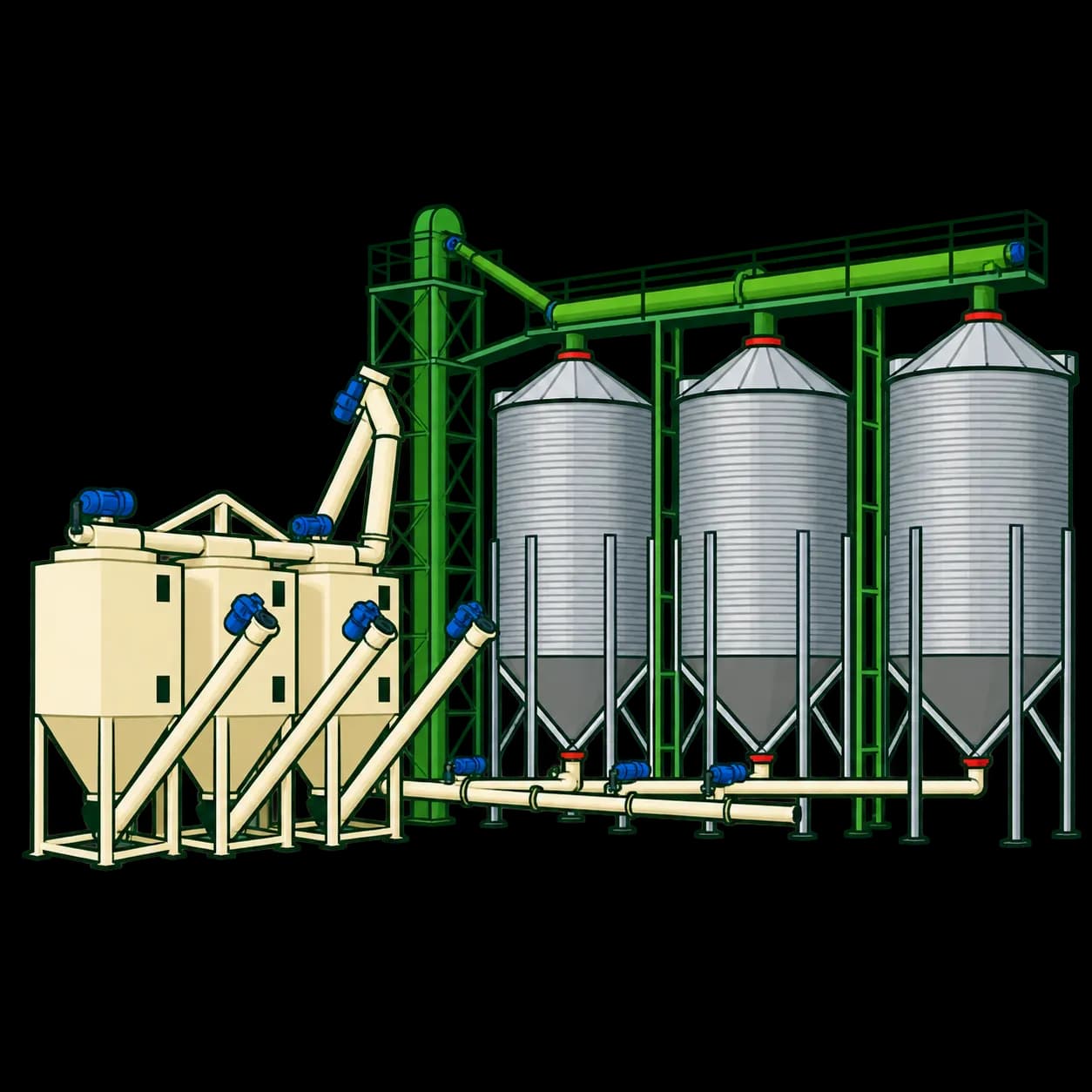
The grain mill is the first station in the feed formulation process, and its work quality affects all subsequent stages. The particle size of the mill's output impacts both digestion in the rumen and the time required for mixing.
The key point is that "softer" is not always "better." Excessive grinding of grains in ruminant diets can increase fermentation speed and raise the risk of acidosis.
At a glance
- The size of the screen holes determines the maximum output particle size.
- Finer screens mean softer particle size, lower capacity, and higher energy consumption.
- Worn hammers reduce capacity even if the screen is intact.
- Uniform feed input affects both capacity and output uniformity.
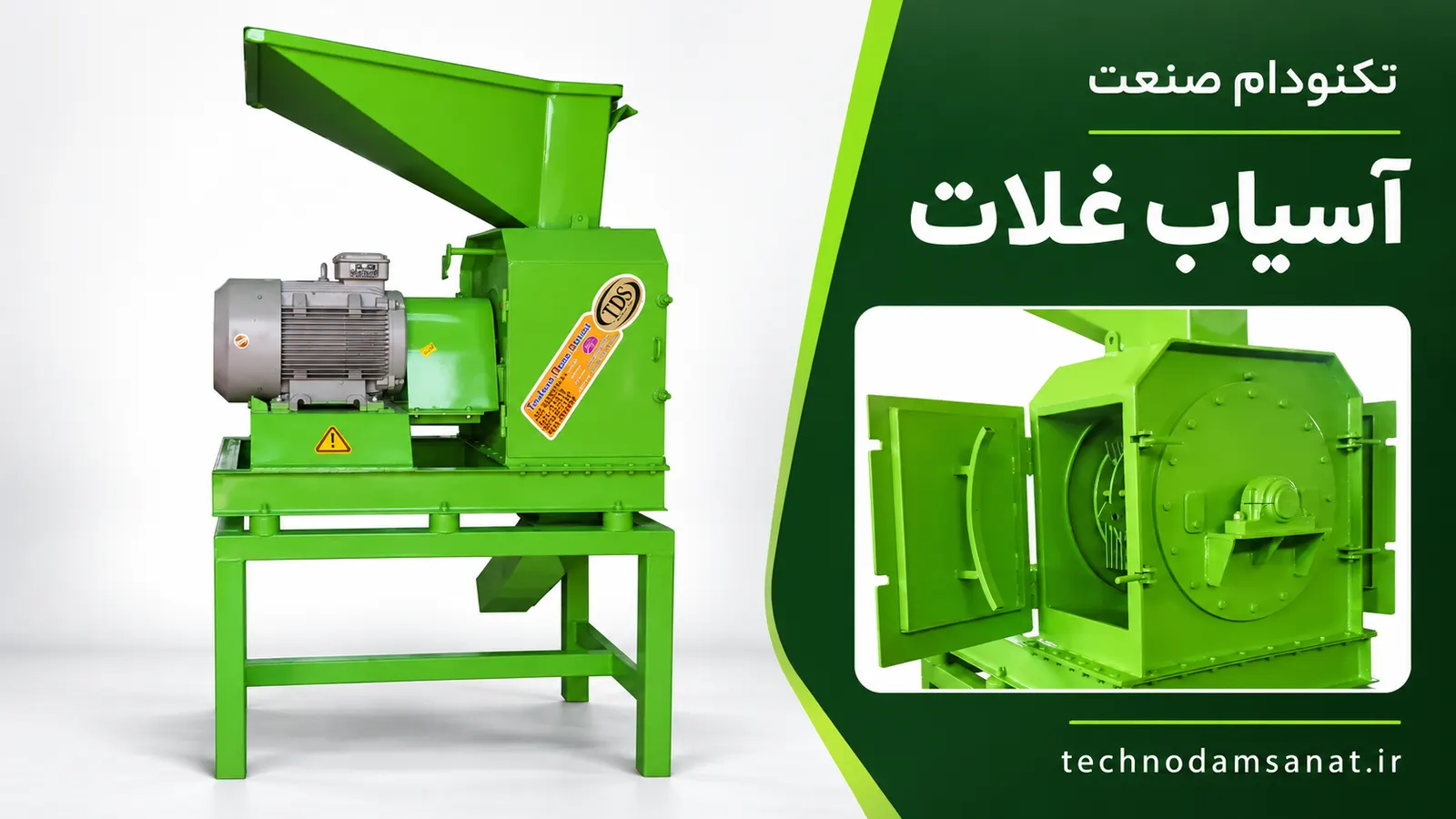
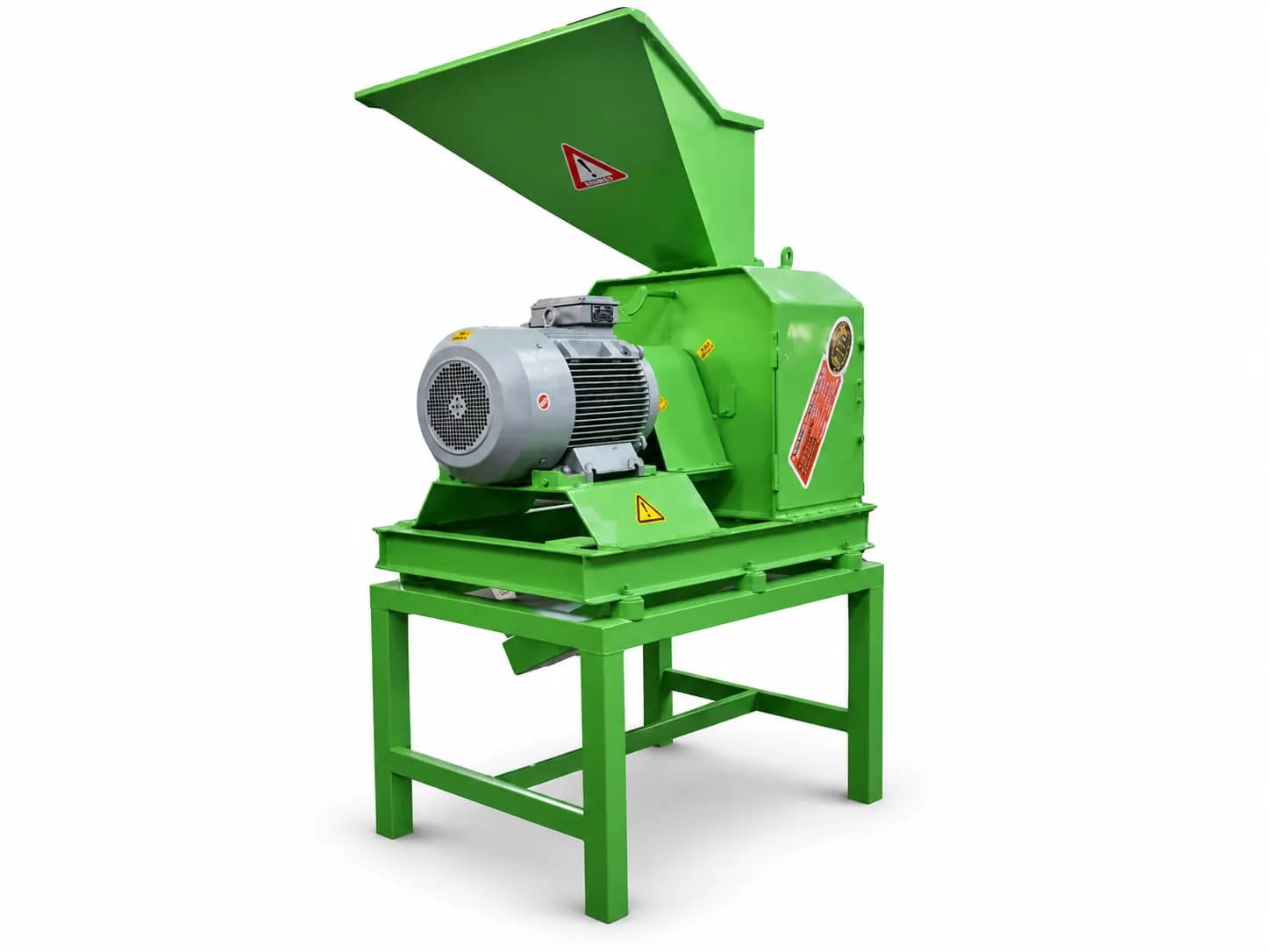
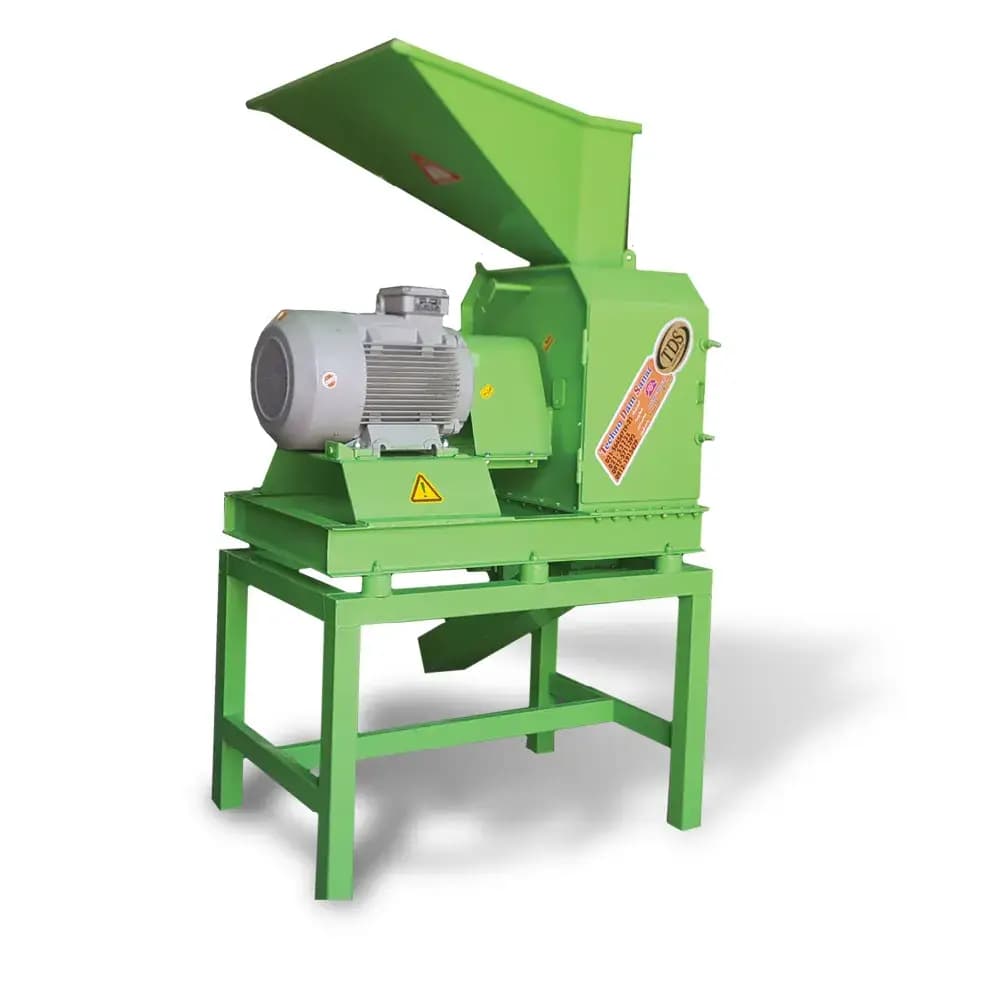
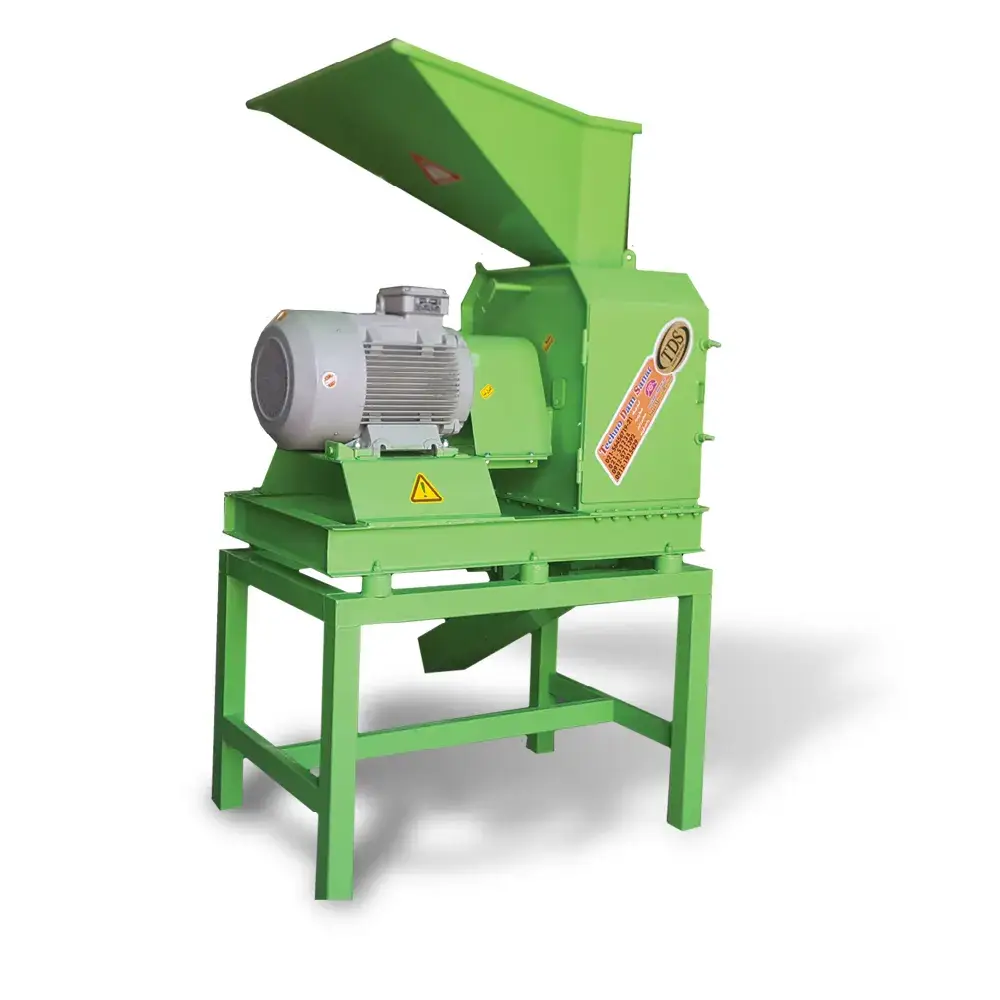
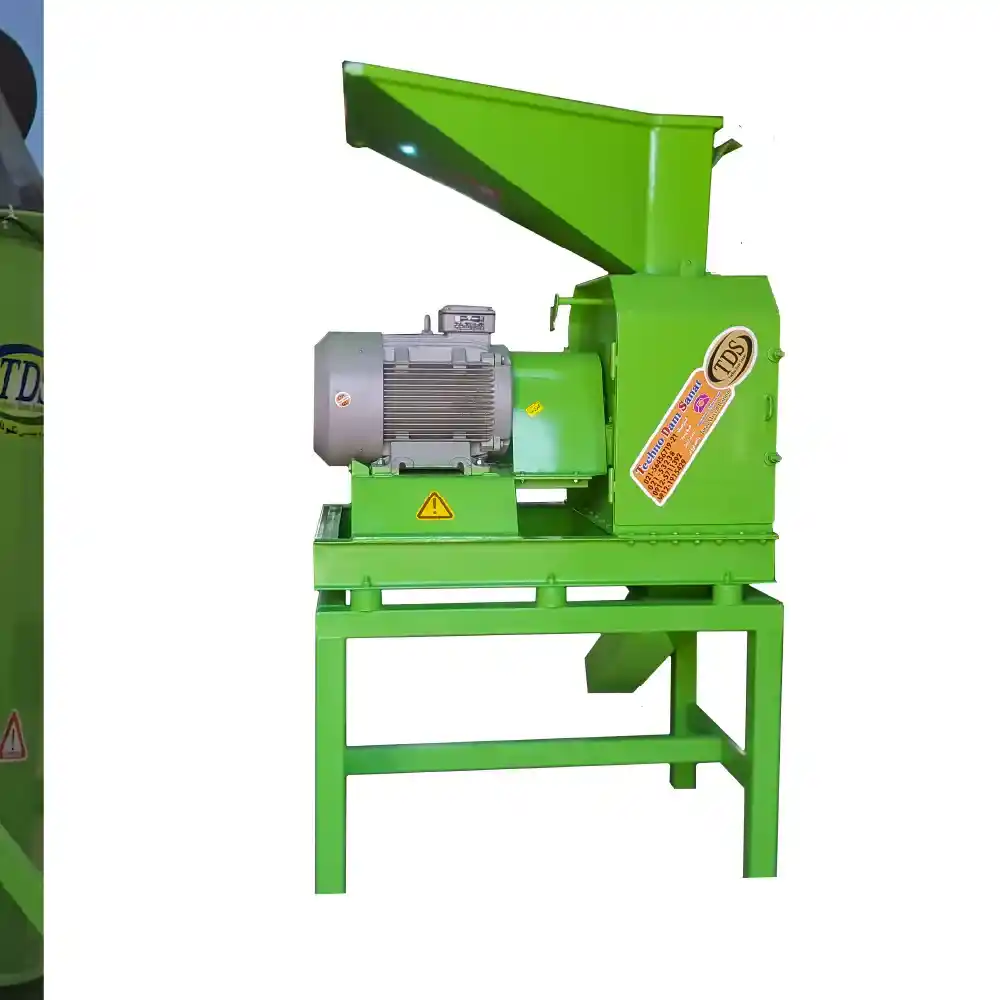
Grain mill
Technical specifications
| Product type | Grain mill (hammer) |
|---|---|
| Application | Grinding barley, corn, wheat, and other grains |
| Particle size adjustment | By changing the screen |
| Consumable parts | Hammers and screens |
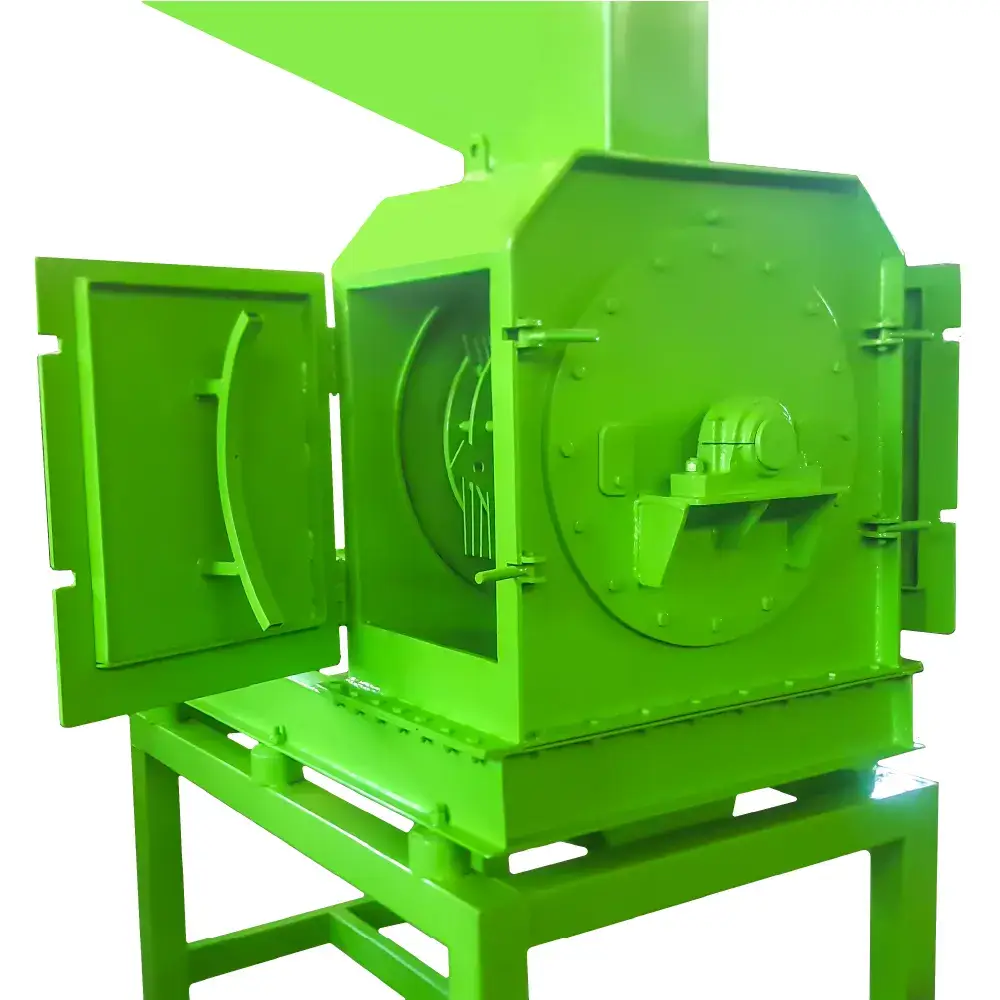
| Safety note | Complete rotor stop before opening the door |
| Brand | Techno Dam Sanat (TDS) |
What unit is it suitable for?
This device is suitable for units that grind grains on-site and want to control the particle size of the feed.
The declared capacity of each mill is usually for a specific type of grain and screen size and varies with changes; consider this when comparing models.
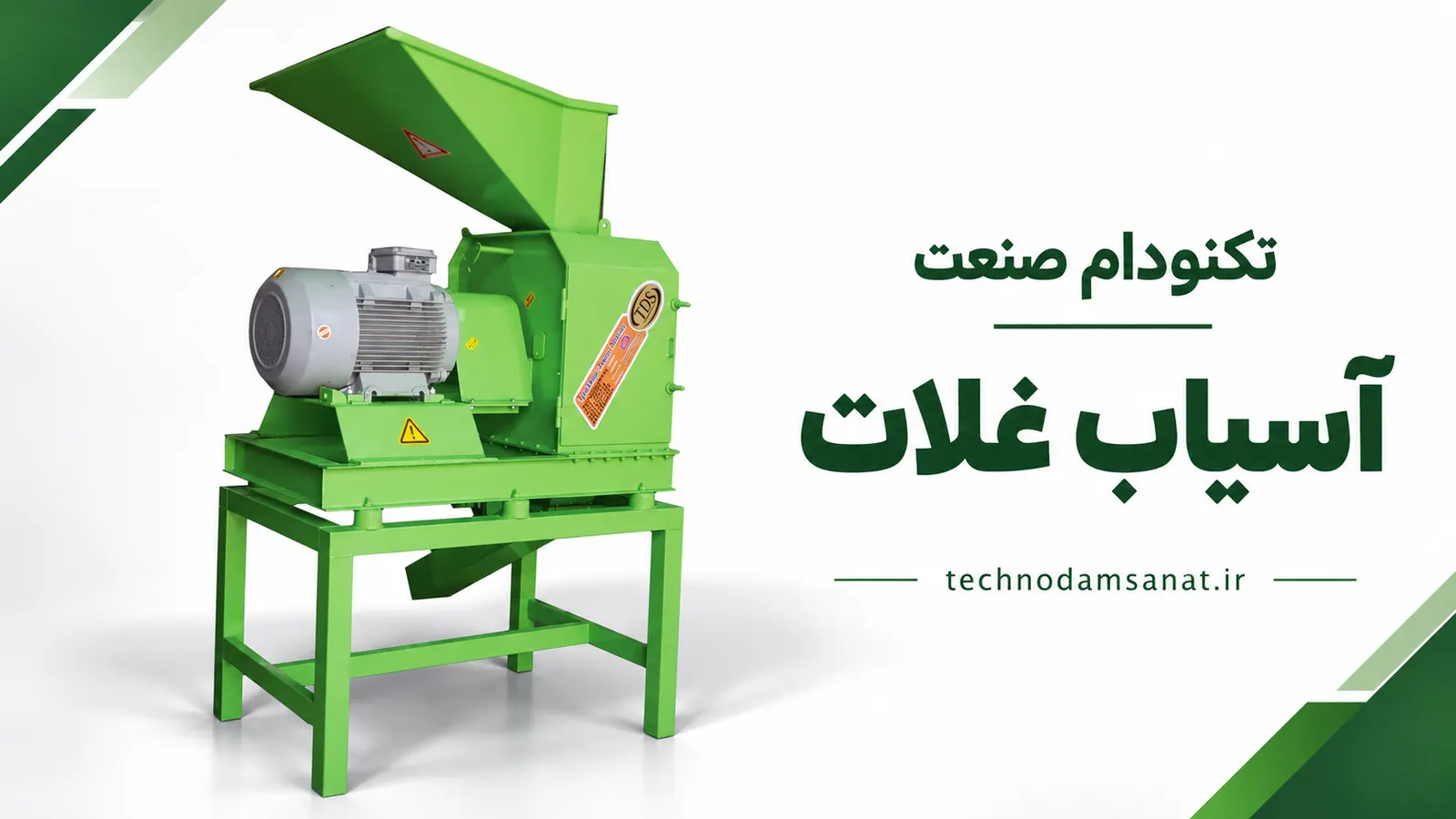
Livestock feed mill
Features and construction advantages
- Ability to adjust output particle size by changing the screen.
- Replaceable hammers as consumable parts.
- Structure suitable for continuous operation in the feed production station.
- Can be equipped with an input feeding system for stable loading.
- Spare parts including hammers and screens provided by Techno Dam Sanat.
Check these before purchasing
- Determine your daily grain consumption volume and working time window.
- Calculate the required capacity in tons per hour.
- Determine the target particle size with a nutrition expert.
- Check the available electrical power and panel capacity.
- Consider the installation location, input feeding system, and dust control.
Related products
Buying guide and related articles
- What is a livestock feed mill? Selection guide
- Choosing the grain mill screen; balancing capacity and particle size
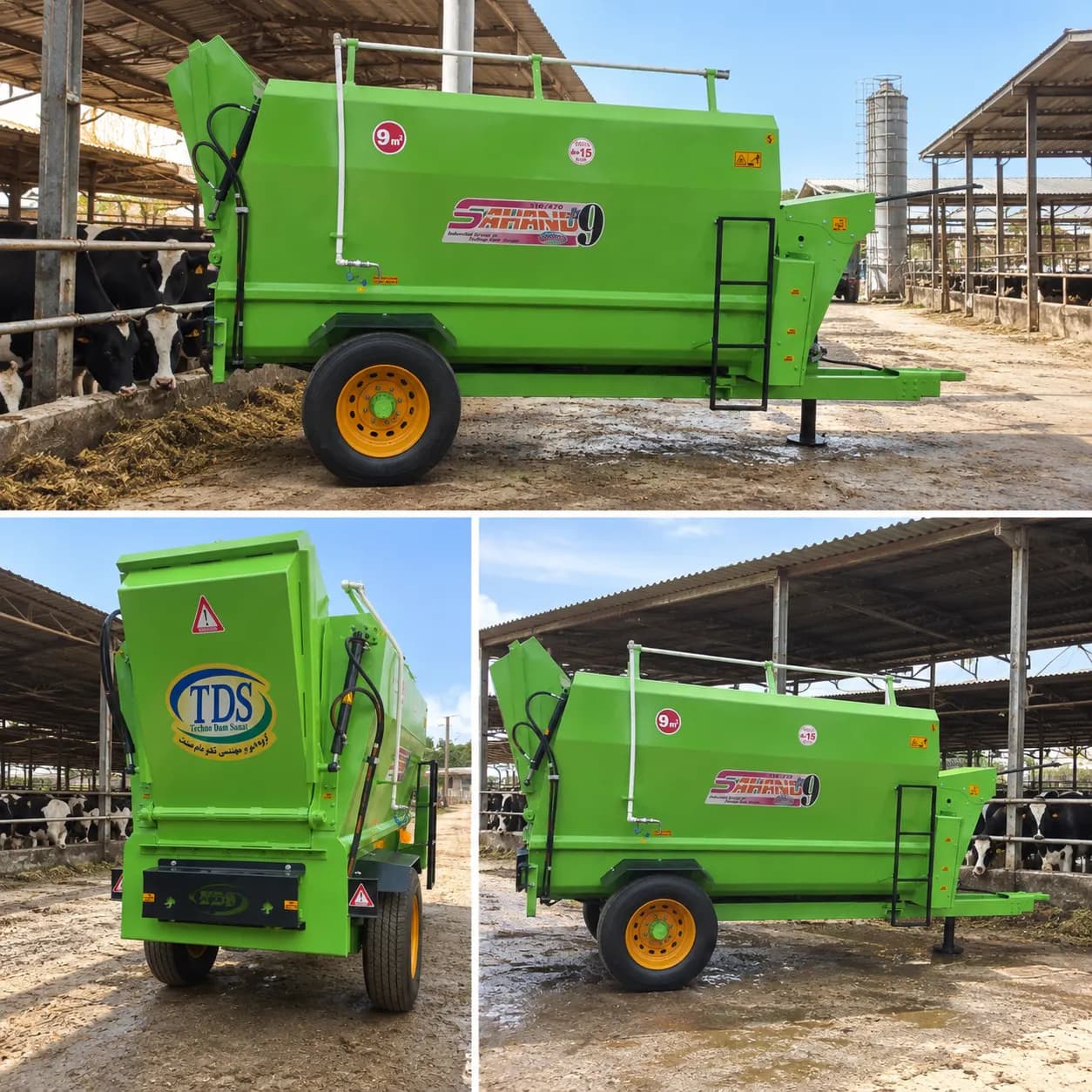
- Feed particle size; the role of the mill and mixer feeder
- Animal feed factory; components of the line from mill to mixer
Frequently Asked Questions
What capacity do I need for my unit?
Divide the daily grain consumption volume by the working time window to obtain the required capacity in tons per hour.
What screen size is suitable for dairy cows?
It depends on the ration formula and the share of grains. The general rule is that for ruminants, medium grinding is preferred over very fine grinding.
Why has the mill capacity decreased?
The most common causes: wear of hammers, screens with oval holes, irregular input feeding, and voltage drop.
How often should I replace the hammers?
Based on tons ground, not calendar time. A reduction in capacity and an increase in motor load under the same conditions indicate hammer wear.
What is an important safety tip?
The rotor continues to spin for a while after shutting down; opening the door before it has completely stopped is very dangerous.
To choose the appropriate capacity and screen size for your ration, contact our technical experts.