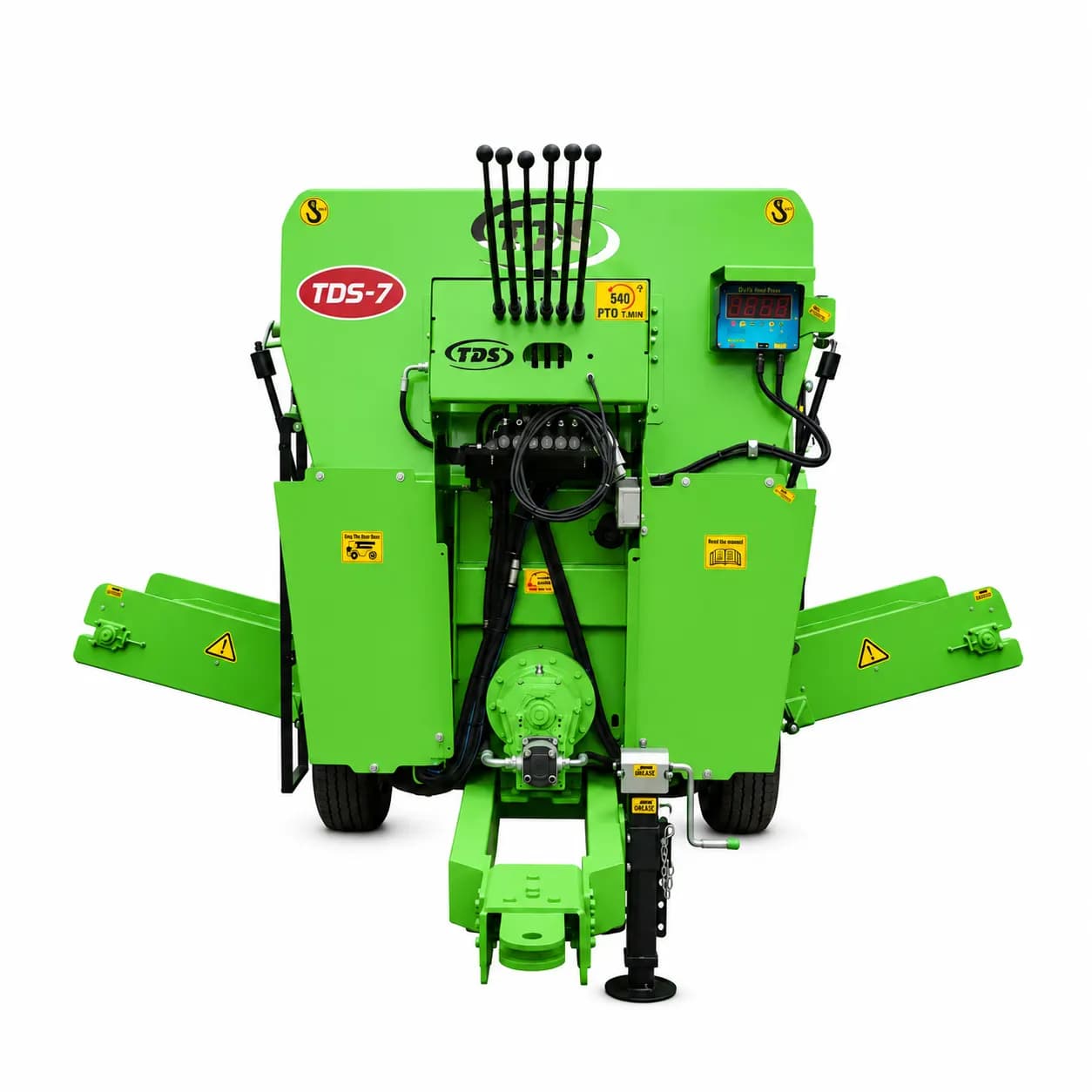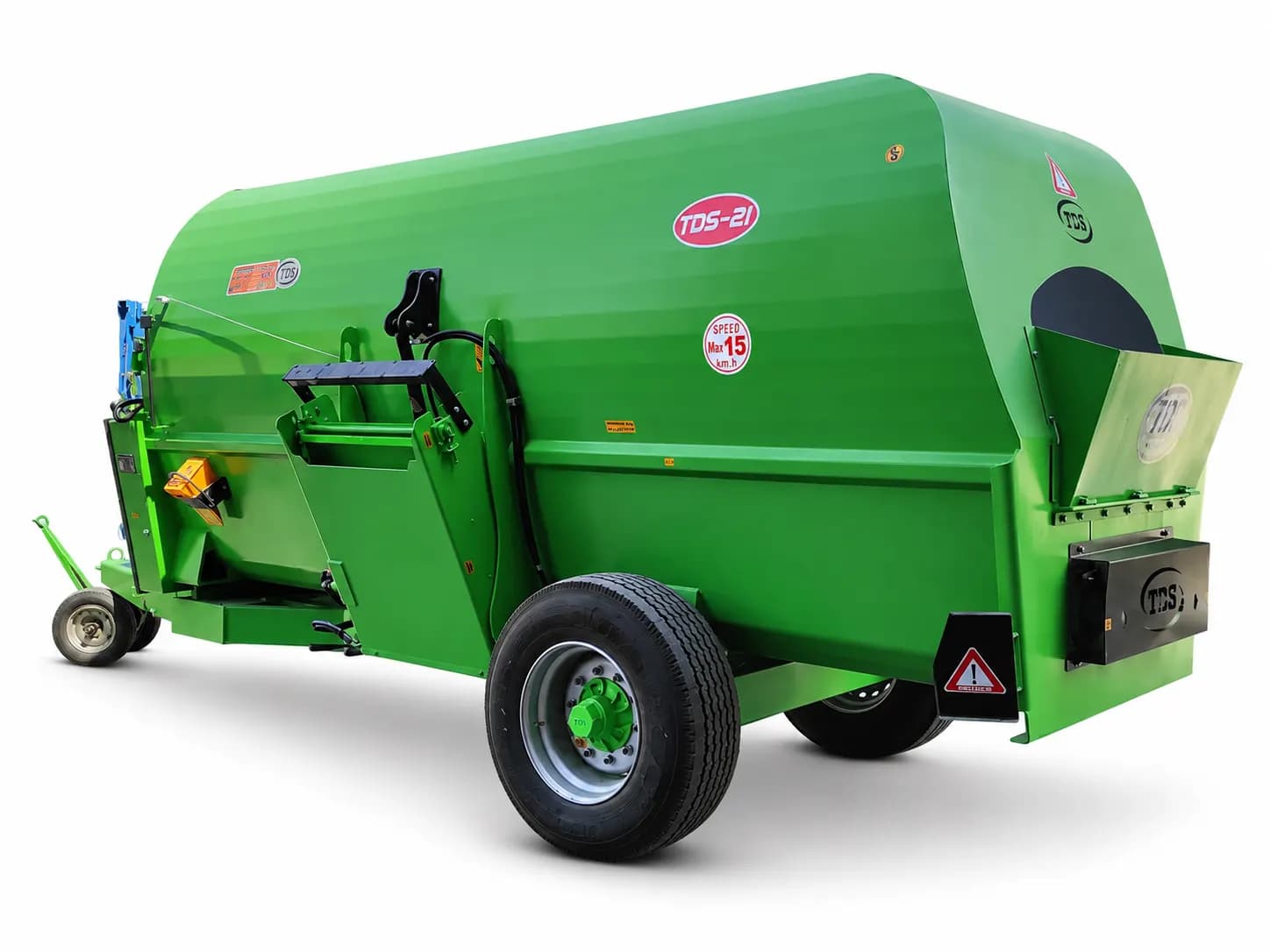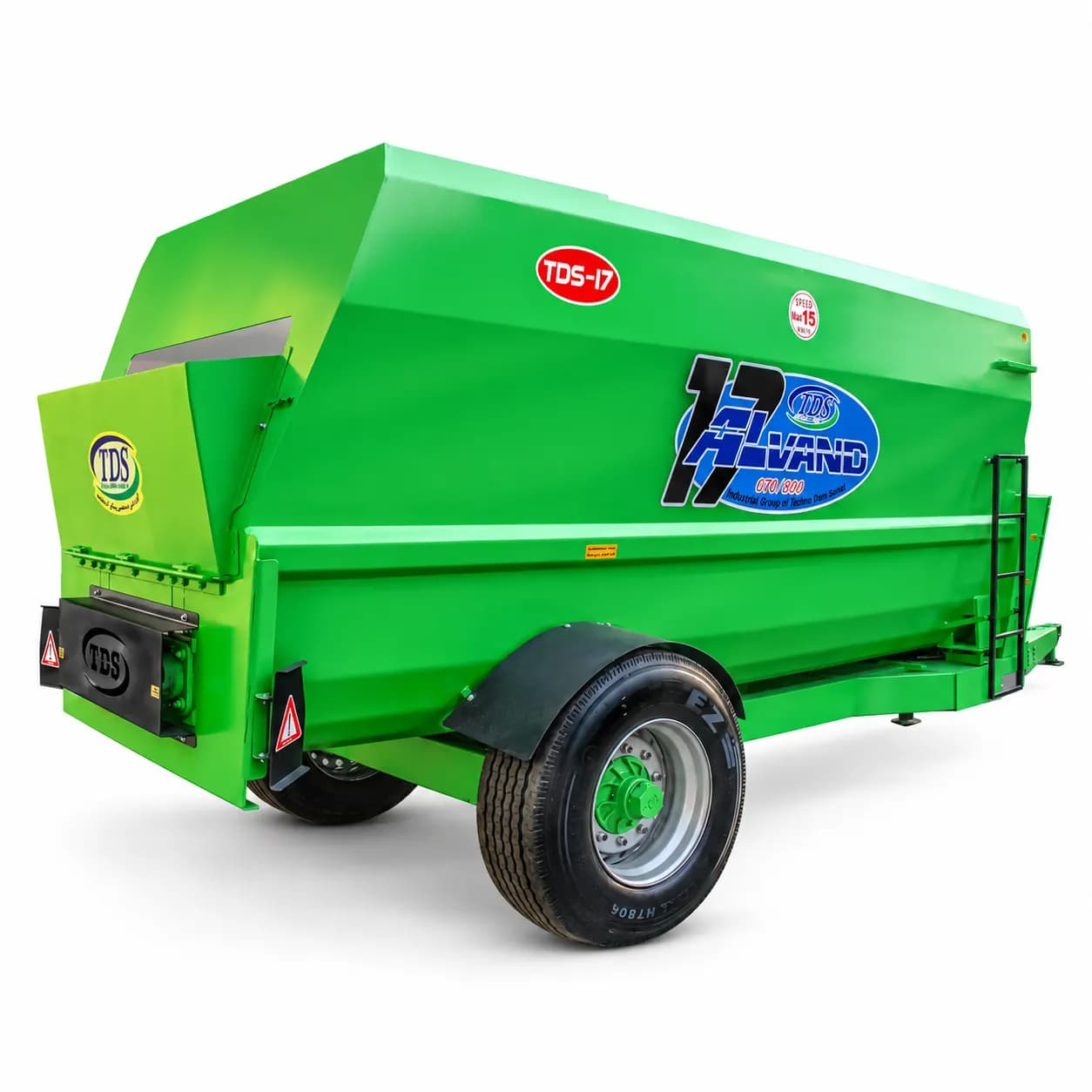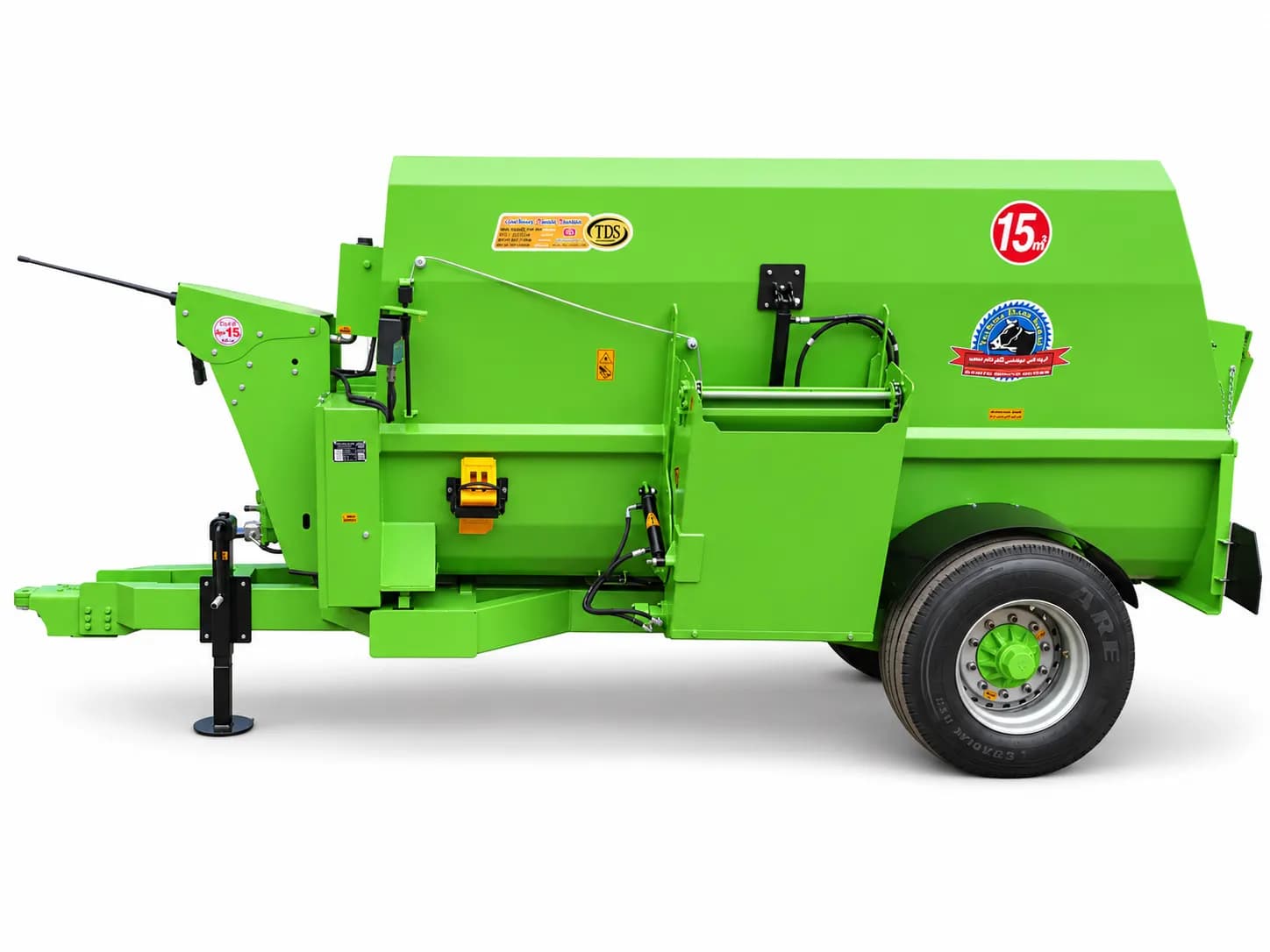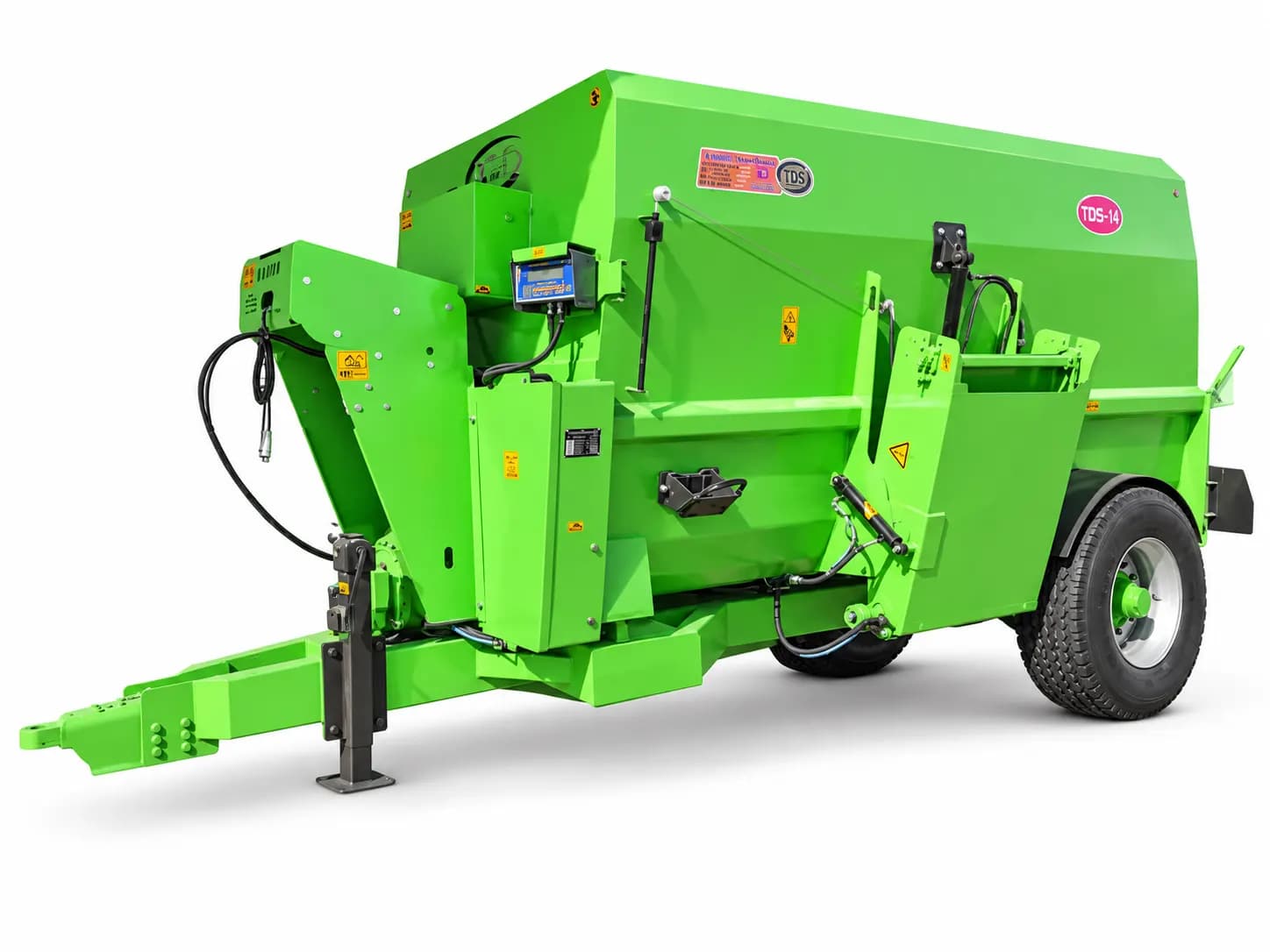


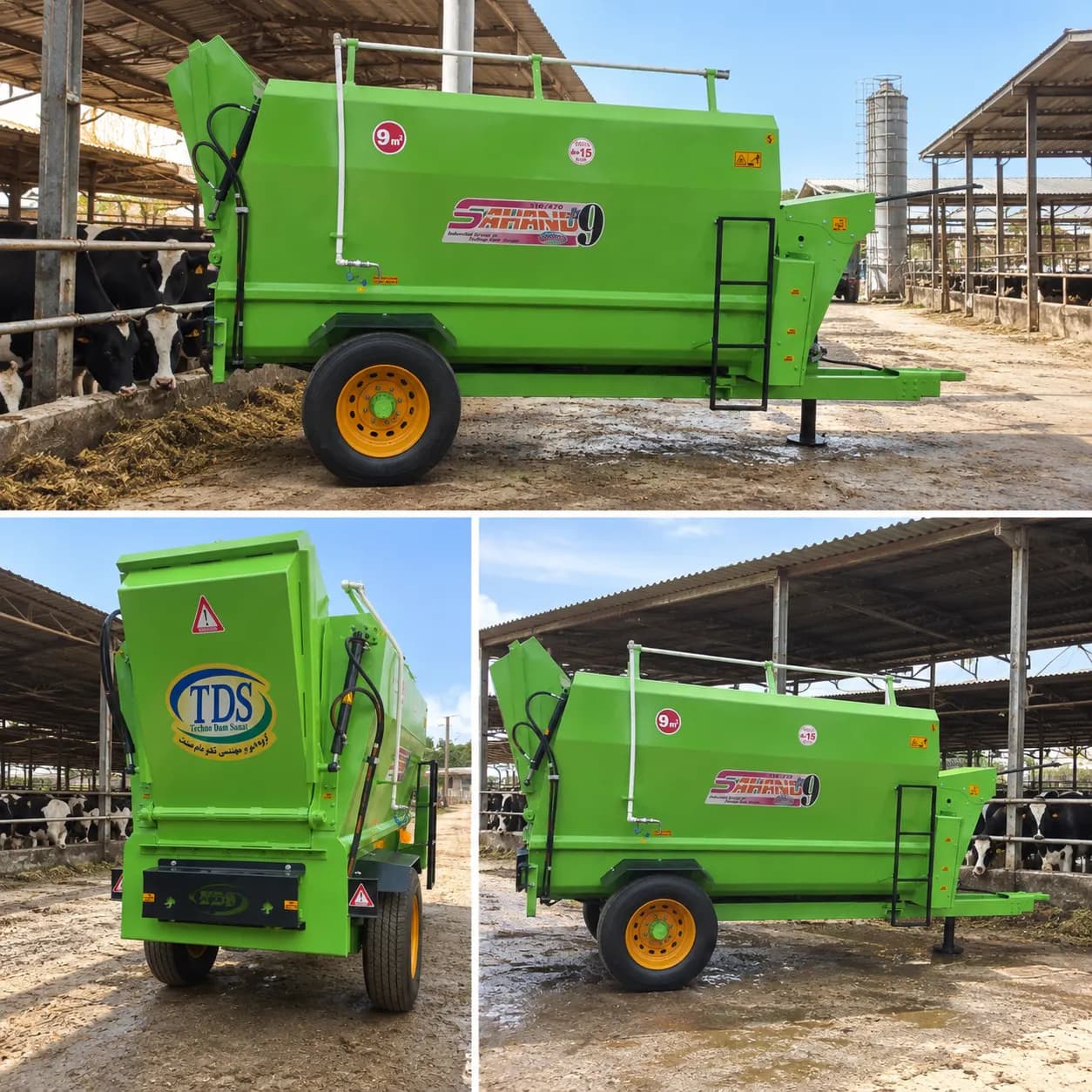
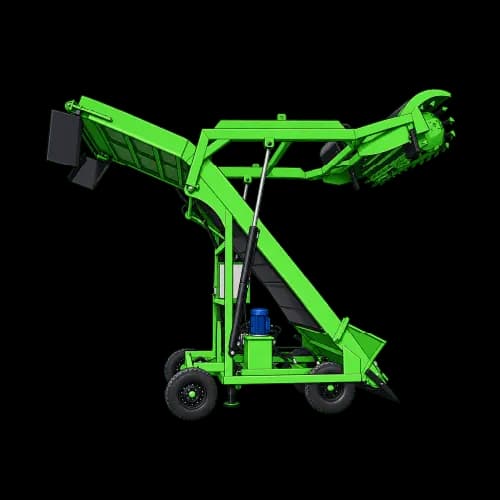
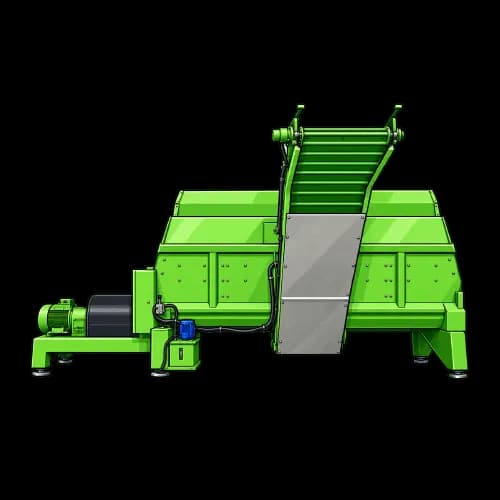
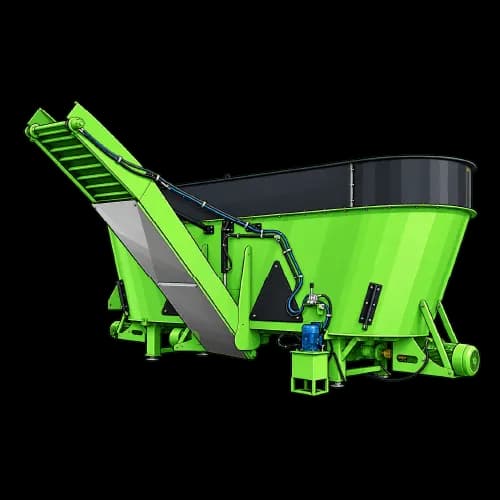
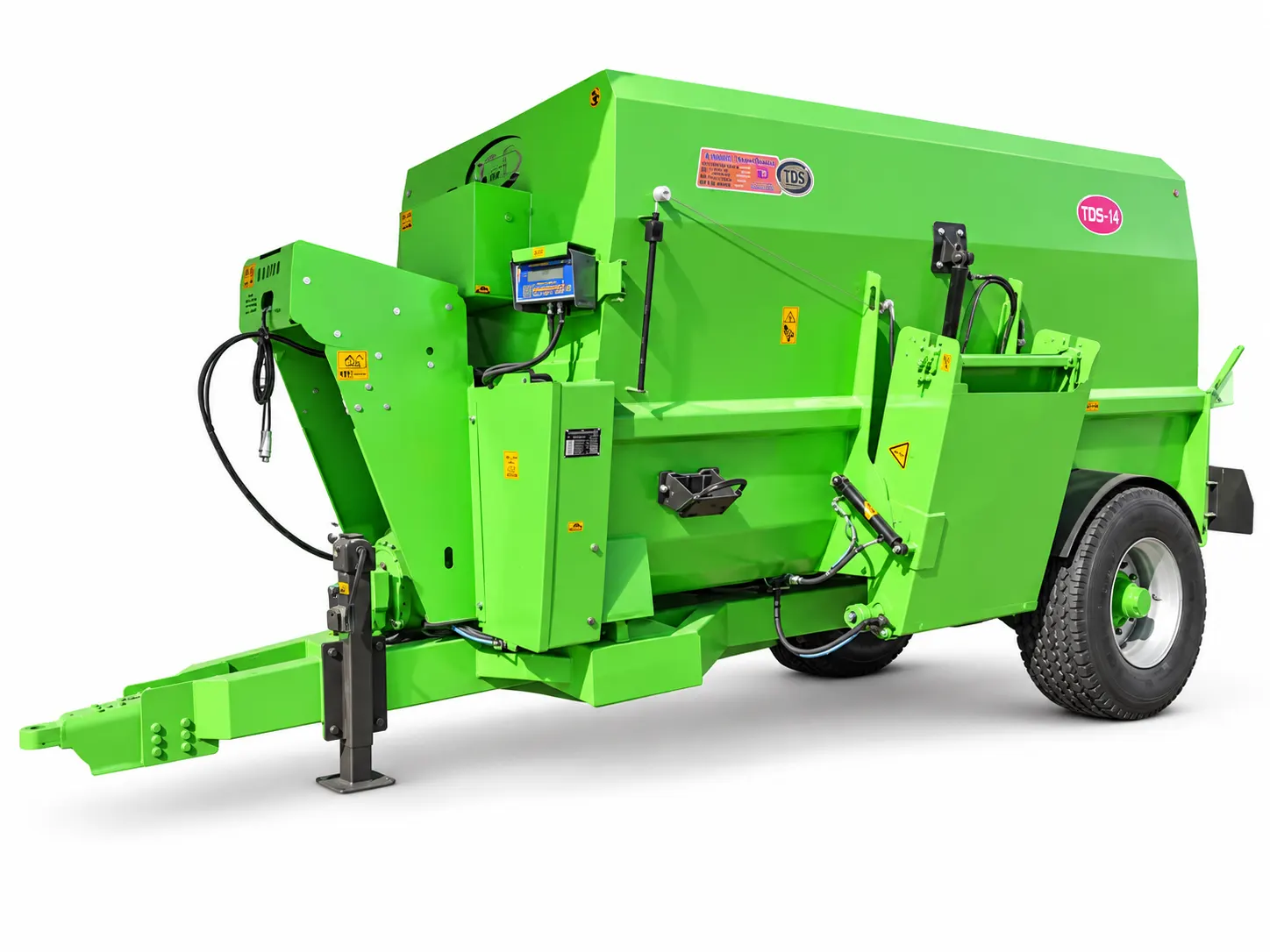
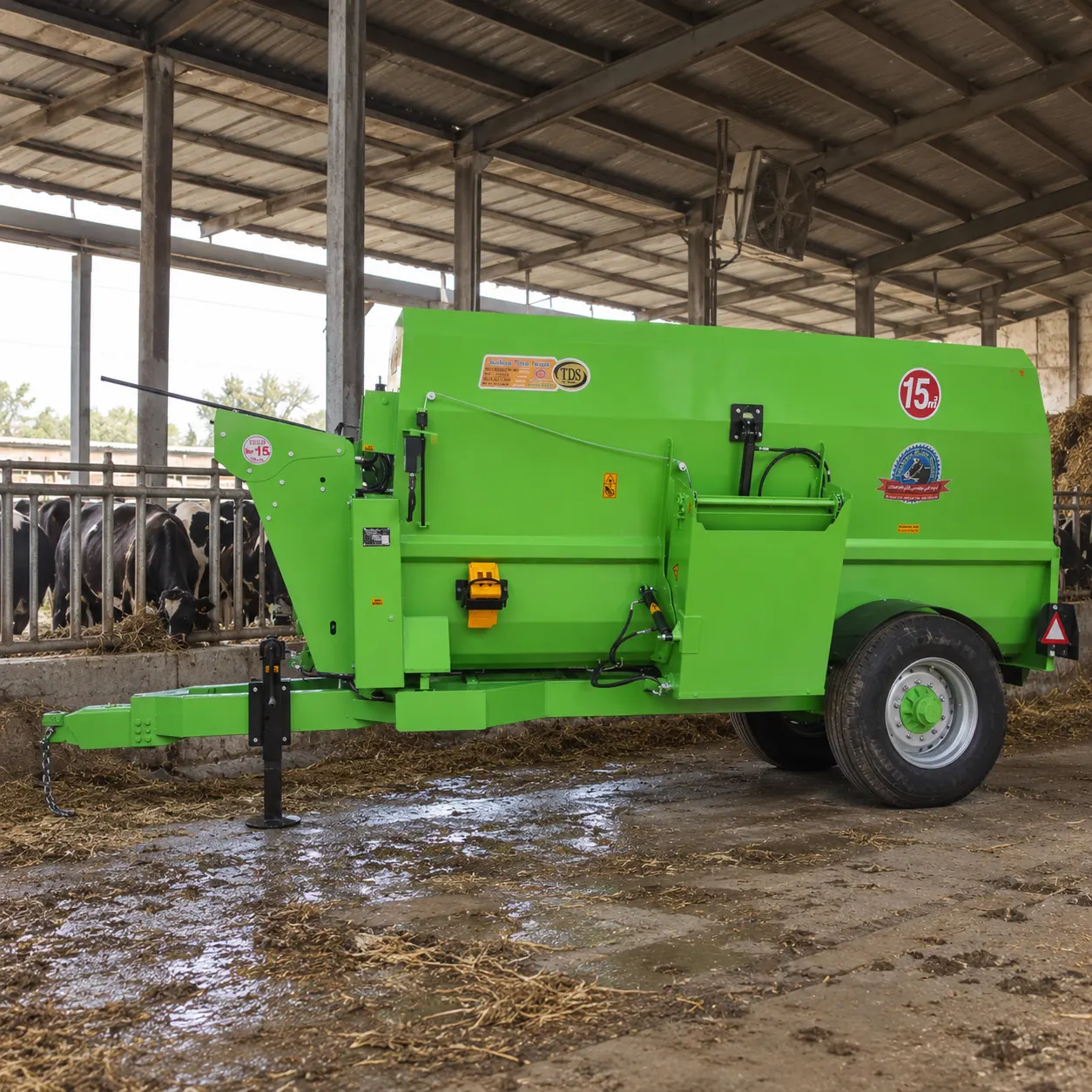
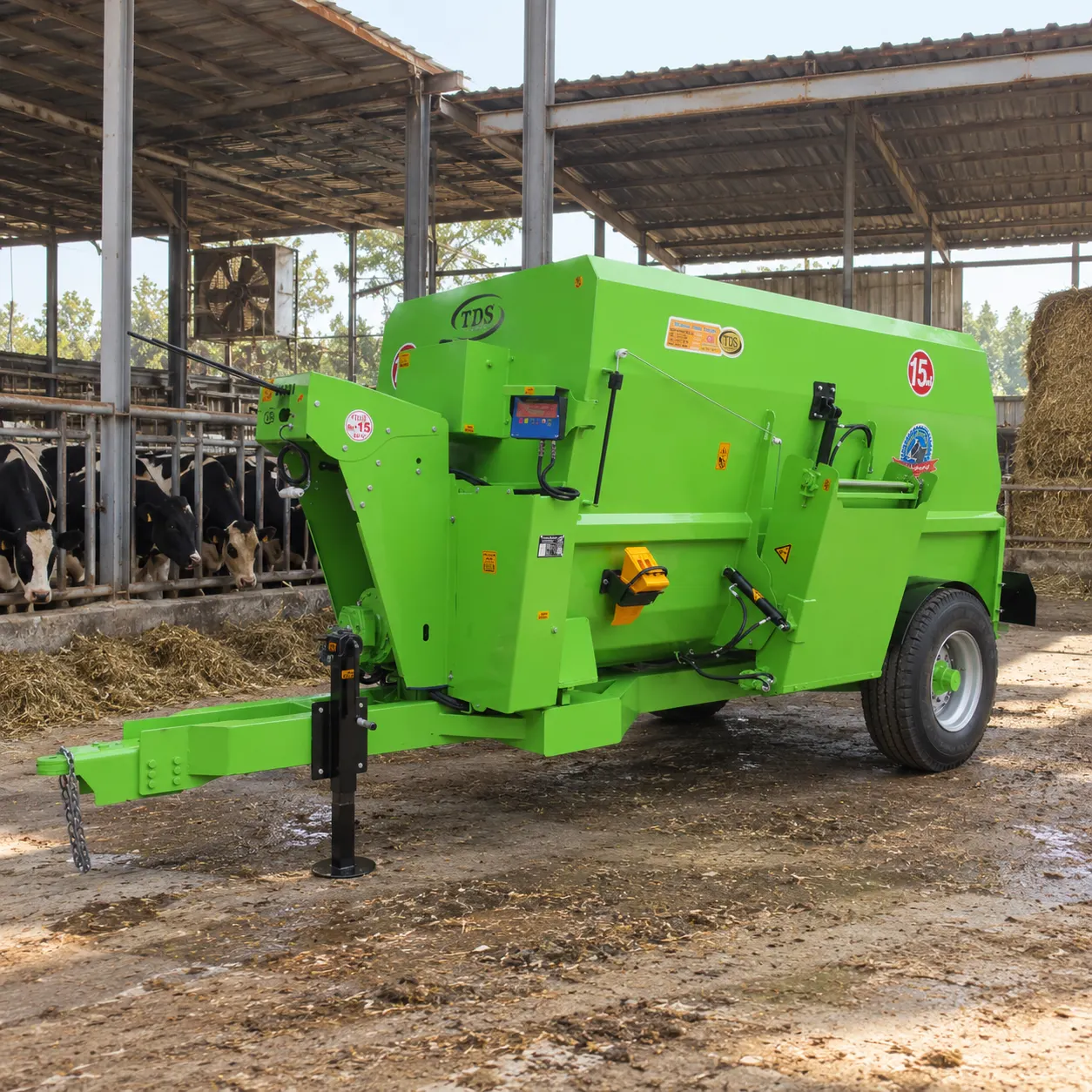
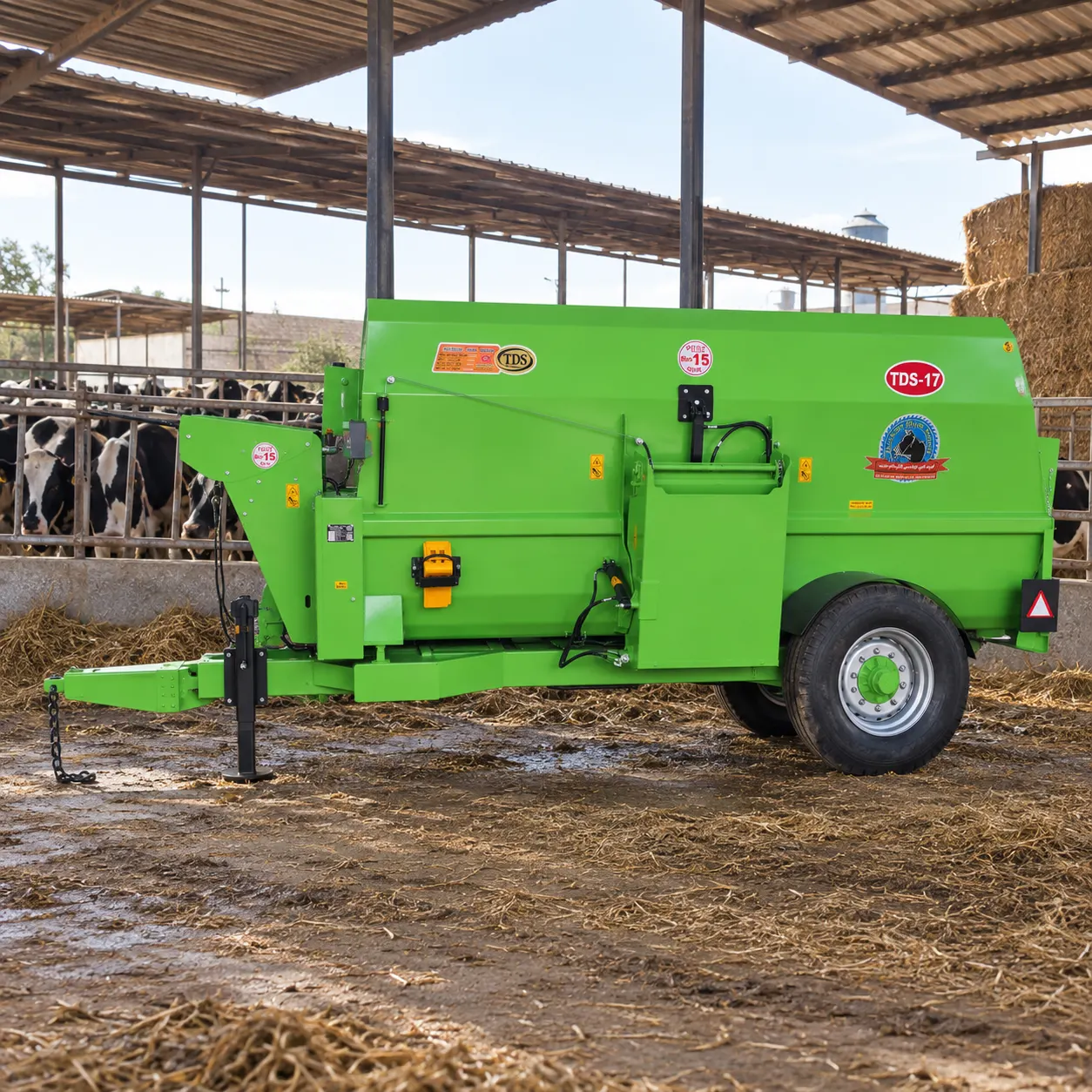
Dairy Farm Feed Mixer 14 cubic meter mobile manufactured by Techno Dam San'at, designed for producing Total Mixed Ration (TMR) for large herds with multiple feeding groups. The vertical auger and its mounted blades simultaneously chop forage and mix ration components uniformly.
Reduces the number of batches per day and operator working hours in large units. The prepared ration is directly discharged into the trough, eliminating the need for a separate transfer system.
At a glance
- Nominal capacity 14 cubic meters; useful capacity is less than this number depending on the bulk density of your ration.
- Power source: PTO and connection to tractor.
- Ability to install a weighing system with load cell and display for precise ration formulation.
- Suitable for large herds with multiple feeding groups; capacity calculation should be based on the largest feeding group.
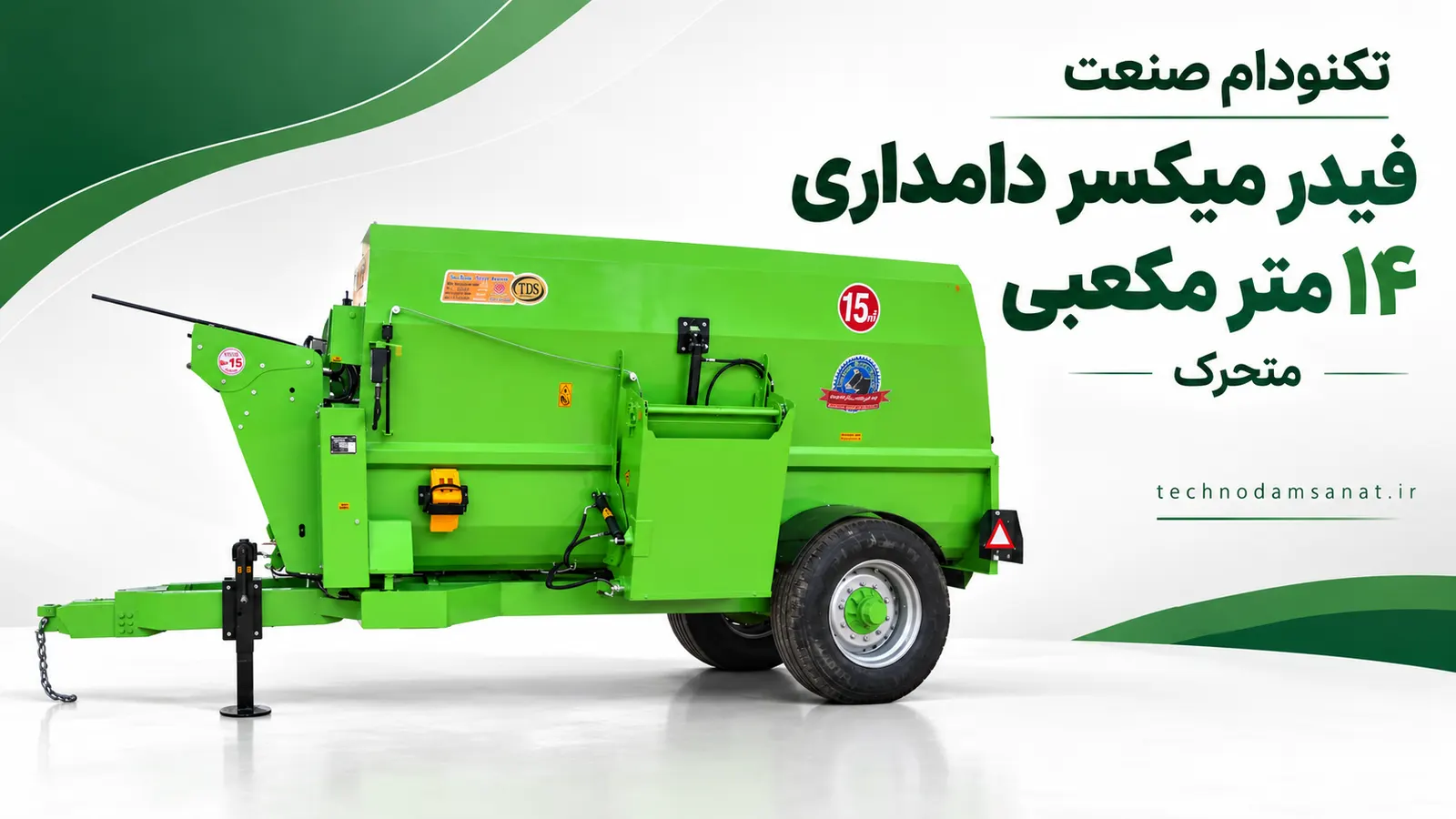
14-cubic-meter feed mixer
Technical specifications
| Nominal tank capacity | ۱۵ cubic meters |
|---|---|
| Type of machine | Mobile (towed) |
| Mixing system | Vertical auger with replaceable blades |
| Power source | PTO and connection to tractor |
| Weighing system | Load cell and digital display (available on order) |
| Discharge system | Hydraulic gate and conveyor (depending on order) |
| Blade | Crescent, corrugated, or chisel based on ration type |
| Brand | Techno Dam San'at (TDS) |
| Application | Producing Total Mixed Ration (TMR) |
What is the application and suitable for which unit?
This model is suitable for large herds with multiple feeding groups. The correct basis for selecting capacity is the volume of ration for the largest feeding group at each batch, not the total number of animals; because each batch is made for one group, and splitting a group between two batches disrupts the uniformity of that group's ration.
To use this model, you need a tractor with suitable power and an aisle with enough width and turning space. Measure the aisle width at the narrowest point, the free height of doors, and the slope of the path before purchasing.
Features and advantages of construction
- Vertical auger with a material rotation pattern that simultaneously mixes and chops.
- Replaceable blades suitable for the type of forage; corrugated for long fibrous forage and crescent for mixed rations.
- Ability to work with long dry forage and bales without the need for complete prior chopping.
- Body and structural components suitable for continuous daily operation in a dairy environment.
- Possibility of equipping with a digital weighing system for precise ration formulation.
- Supply of spare parts and service. Mobile on-site by Techno Dam San'at.
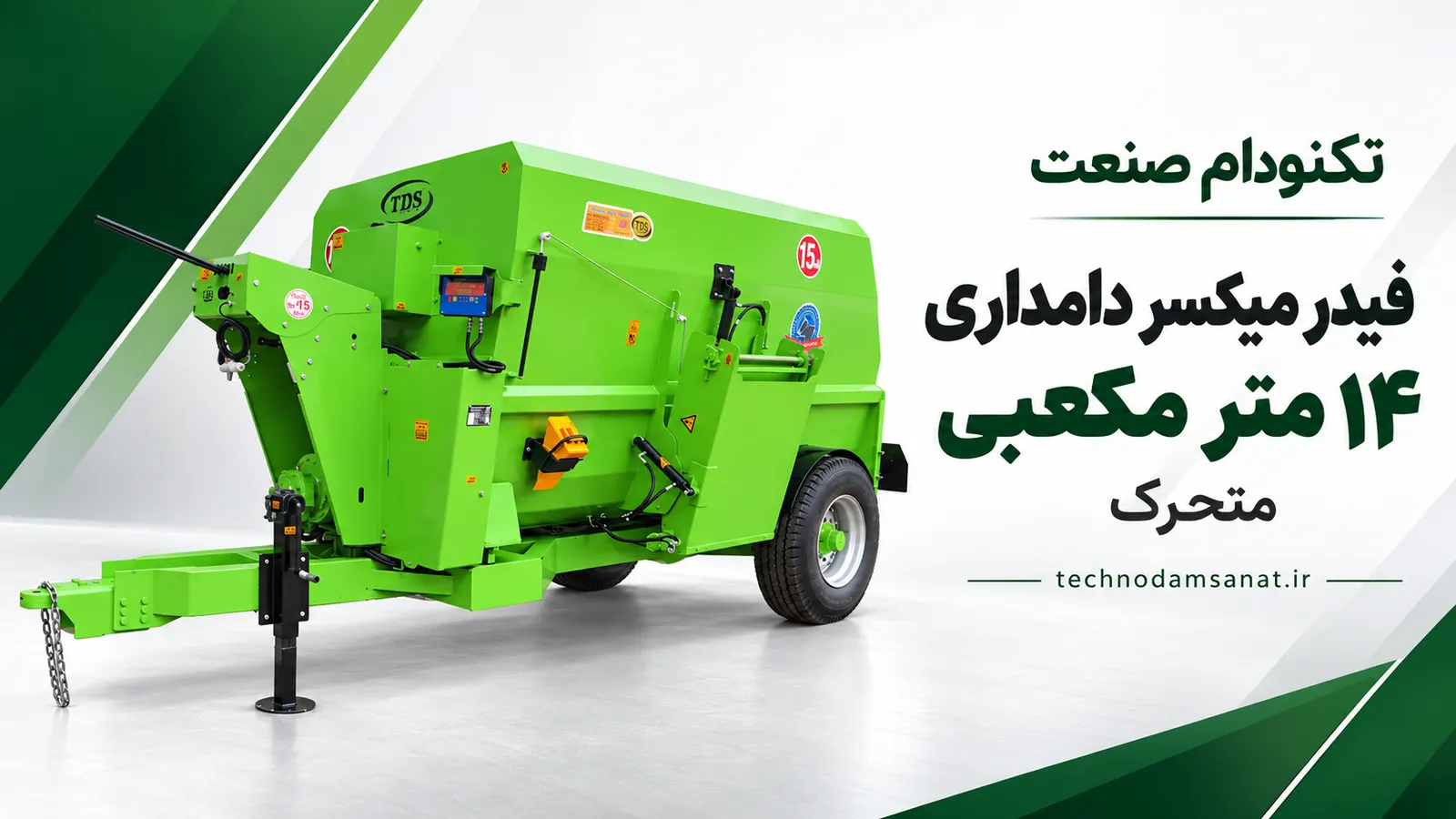
14-cubic-meter feed mixer
Check these items before purchase
- Determine your daily dry matter intake with a nutrition expert for your largest nutritional group.
- Determine the bulk density of your ration; a high dry forage ration is bulkier than a silage ration.
- Calculate the required volume for each batch and compare it with the useful capacity of this model.
- Compare the power of your existing tractor with the recommended power of this model.
- Measure aisle dimensions, door clearance height, and turning space.
- Specify your need for a weighing system and ancillary equipment before requesting a price.
Installation, warranty, and after-sales service
Installation and commissioning, operator training, and delivery in real load are part of the equipment delivery process. After delivery, a periodic service program including daily inspections, weekly servicing, monthly greasing, and seasonal reviews is recommended.
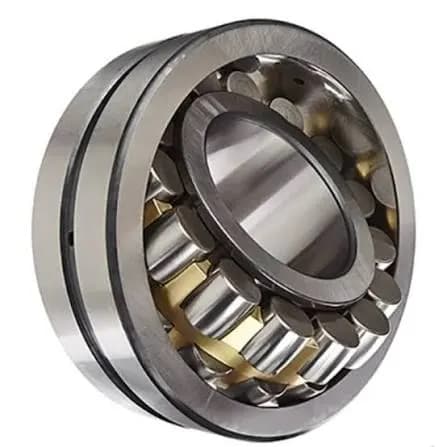
Common consumable parts including blades, blade connection bolts, chains, bearings, and oil can be supplied through Techno Dam San'at. Mobile service is also provided for technical issues on-site at the farm.
Related products
- Farm feed mixer ۳ mobile cubic meter
- Farm feed mixer ۵ mobile cubic meter
- Farm feed mixer ۷ mobile cubic meter
- Wavy blade for feed mixer
- Oil for feed mixer
Buying guide and related articles
- Guide to selecting a farm feed mixer; from TMR to capacity
- How to choose the capacity of a feed mixer?
- Stationary or mobile feed mixer? A complete comparison
- What is TMR feed? Principles of formulation and mixing errors
- How long should TMR mixing take? Under-mixing and over-mixing
Frequently asked questions
What is the appropriate feed mixer ۱۵ cubic meters for how many heads of livestock?
The answer depends on the number of nutritional groups, the number of feeding batches, and the bulk density of your ration, not just the total number of livestock. The calculation should be based on the volume of the ration for the largest group in each batch.
What is the difference between nominal capacity and useful capacity?
Nominal capacity (۱۵ cubic meters) is the geometric volume of the tank; useful capacity is the amount that can be loaded while maintaining mixing quality and without spillage, and is usually less than that.
How much drive power is required?
The recommended tractor power is specified in the technical specifications of this model. Considering a safety margin is essential, as rations with a high proportion of dry forage require more torque.
Is a weighing system necessary?
Yes, for accurate and repeatable ration formulation. Without weighing, the ratio of components will be based on estimation, and the nutrition formula will practically not be implemented.
What is the mixing time of this device?
The optimal time varies for each device and each feed and should be determined through sampling and particle separation screening. Count the time from the end of the last loading.
What is the annual maintenance cost?
It depends on the operating hours, type of feed, and service schedule. Main items include blades, blade connection screws, chains, bearings, and oil.
To receive the current price, complete technical specifications, and assess the suitability of this model with your unit's conditions, required capacity, available tractor power, and aisle dimensions, please discuss with our experts.