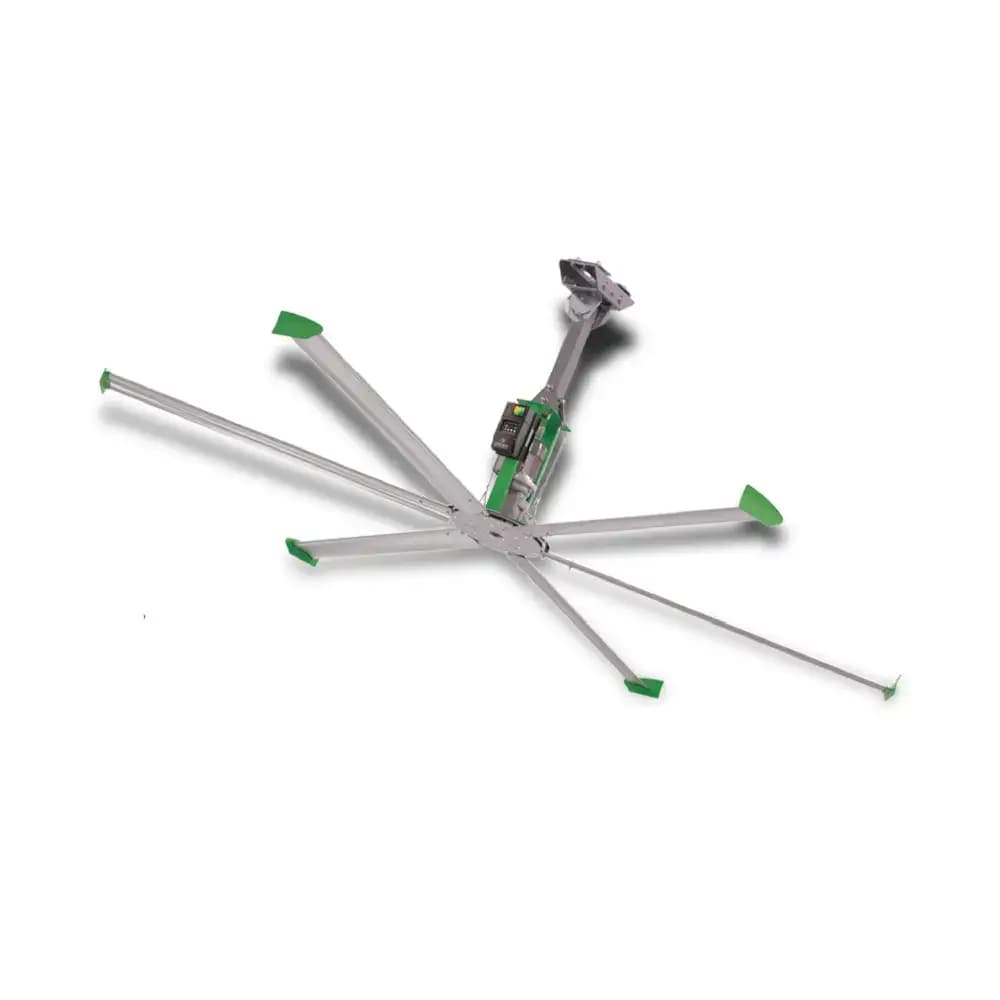


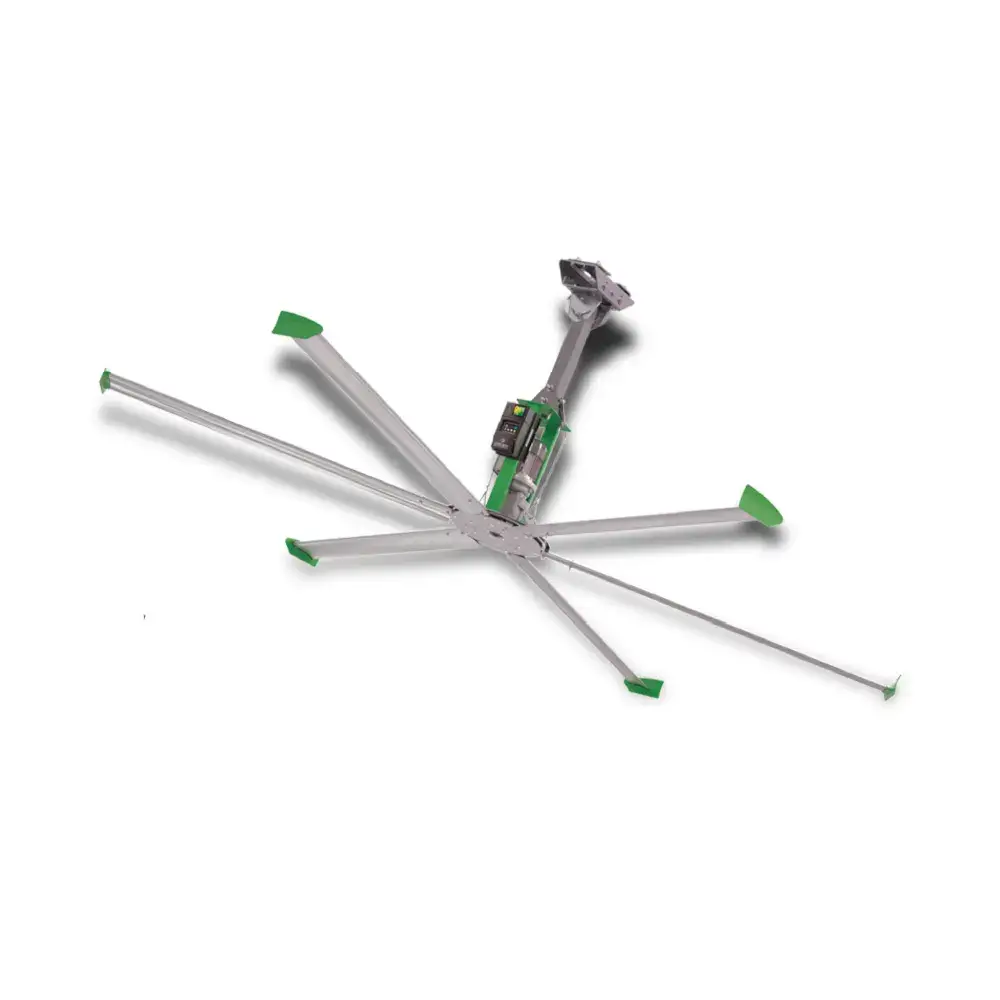
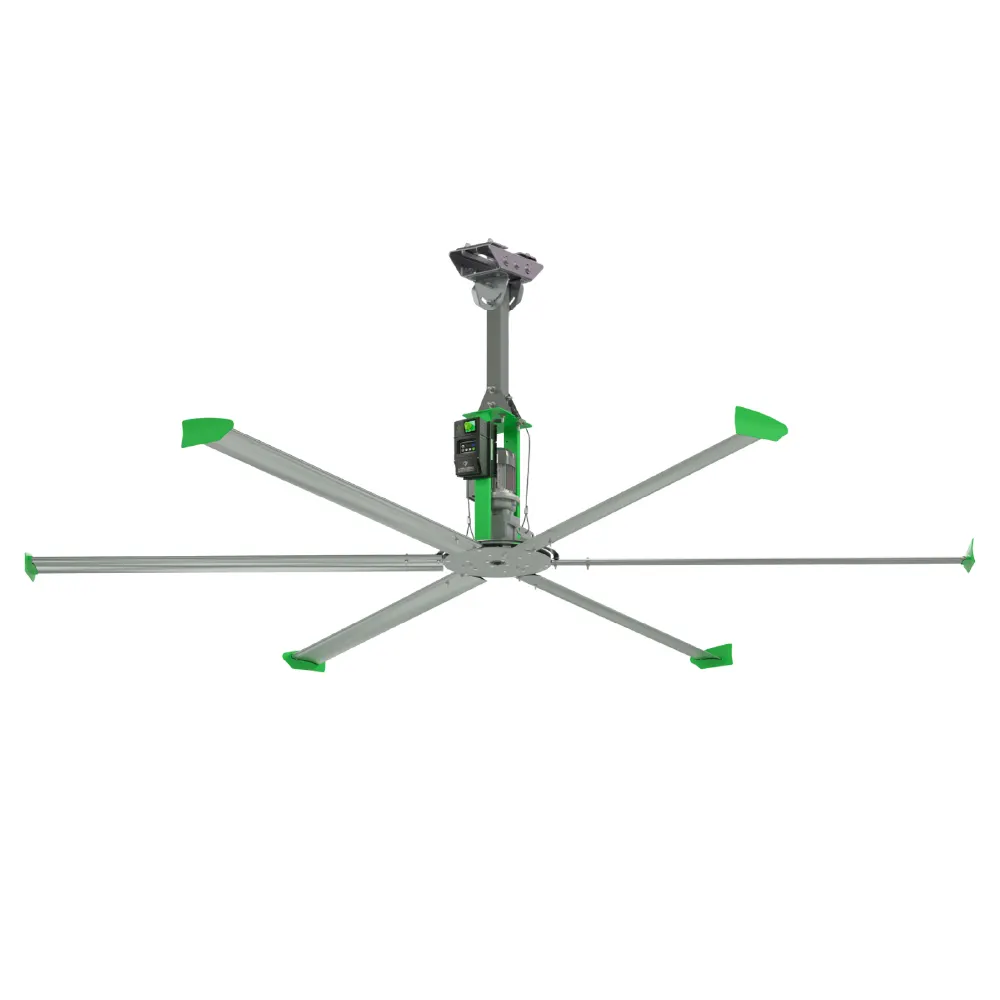
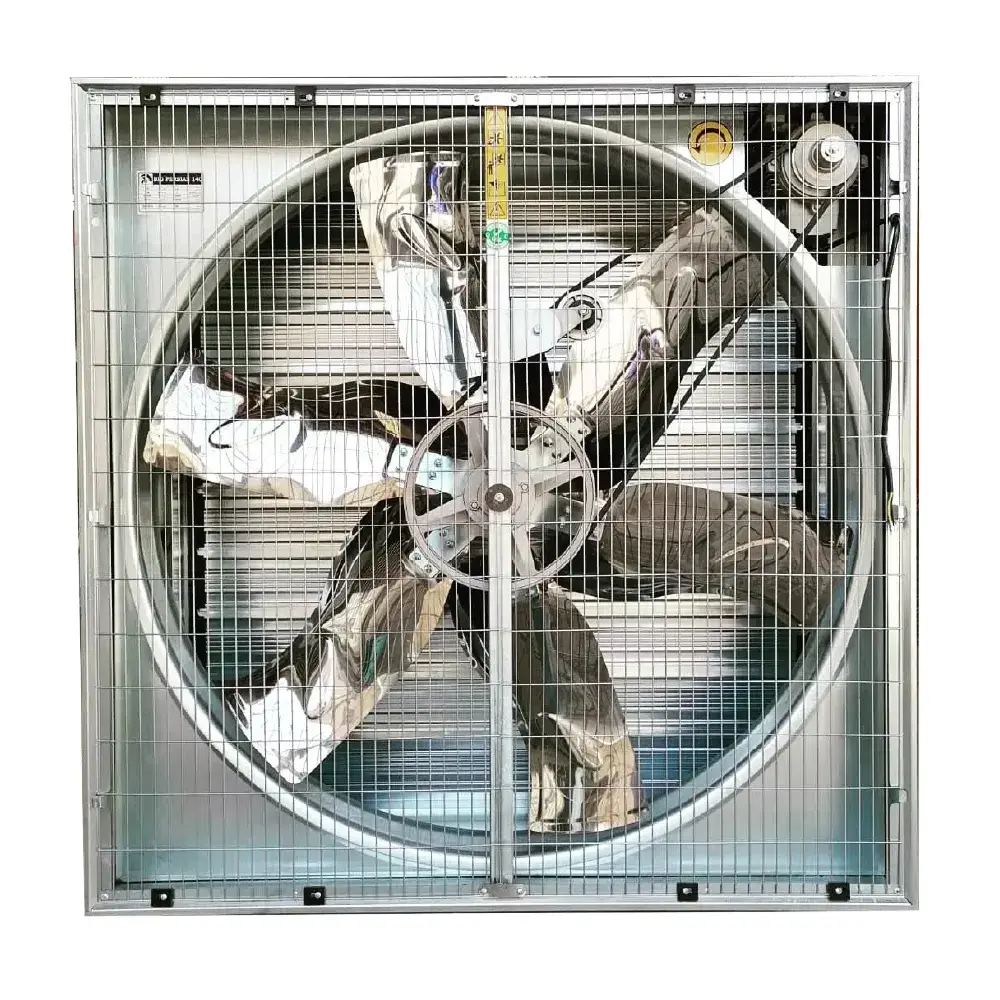
Dairy Ceiling Fan is more related to placement than motor power. A fan installed in the wrong location, no matter how powerful, will not deliver useful airflow to the resting area of the livestock.
The final criterion is simple: during the hot hours of the day, are the animals evenly distributed in the hall or are they congregating in specific spots? The congregation of animals is the most accurate map of your hall's airflow.
At a glance
- The installation distance should be determined based on the effective range of the model, not by evenly dividing the length of the hall.
- The goal is to deliver airflow to the surface of the animals' bodies, not to move air at the ceiling level.
- Speed control or multi-stage thermostat reduces electricity consumption on mild days.
- Fans and misting systems complement each other; a misting system without airflow can worsen conditions.
Technical Specifications
| Product Type | Dairy Ceiling Fan |
|---|---|
| Application | Reducing heat stress and air circulation in the hall |
| Selection Criteria | Effective range and air volume per power consumption |
| Installation | Height and angle suitable for the resting area of the livestock |
| Control | Connectable to a thermostat or speed control |
| Brand | Techno Dam Sanat (TDS) |
What is the application and suitability of this unit?
This product is suitable for dairy halls that face heat stress during warm months. The waiting area for milking and the exit path are also areas that typically have the highest efficiency.
The required number is obtained by dividing the length of the area to be covered by the effective range of the model, not by the total area of the hall.
Features and Advantages of Construction
- Clearly defined effective range for precise installation distance determination.
- Ability to adjust the angle to direct airflow to the resting area of the livestock.
- Capability to connect to a multi-stage thermostat or speed control.
- Design suitable for dusty and corrosive dairy environments.
- Easy access for periodic cleaning of blades and screens.
Check these items before purchasing
- Identify the length and width of the hall and the resting and feeding areas of the livestock.
- Record the pattern of animal congregation during the hot hours of the day to identify dead zones.
- Check the free height of the ceiling and the movement restrictions of equipment.
- Assess the available electrical power and the possibility of installing a temperature control system.
- Plan for cleaning before each heat season.
Related Products
Buying Guide and Related Articles
- Choosing a dairy ceiling fan; placement and airflow
- Dairy ventilation and ceiling fan; principles of airflow
- Stress Heat in the dairy farm; design of fan and water system
- Reducing electricity consumption of the dairy fan; placement and speed control
Frequently Asked Questions
How many fans do I need for my hall?
The number is obtained by dividing the length of the covered area by the effective range of the model, not by the total area of the hall. The pattern of animal aggregation is the best guide to confirm the design.
What should be the installation height?
The height at which the airflow reaches the surface of the animals and does not obstruct the movement of equipment; the exact range is specified in the model specifications.
How can I reduce electricity consumption?
By regularly cleaning the blades and mesh, adjusting the angle and installation distance, and using a multi-stage thermostat or speed control on mild days.
Does the fan alone solve heat stress?
Usually not in very hot conditions. Combining airflow with evaporative cooling, sufficient shade, and access to cool water yields better results.
How important is cleaning?
Dust on the blades reduces useful airflow while electricity consumption remains nearly constant; meaning you pay for air that hasn't been moved.
To design the placement of fans in your hall, share the dimensions of the hall and the pattern of animal aggregation with our experts.